Introduction
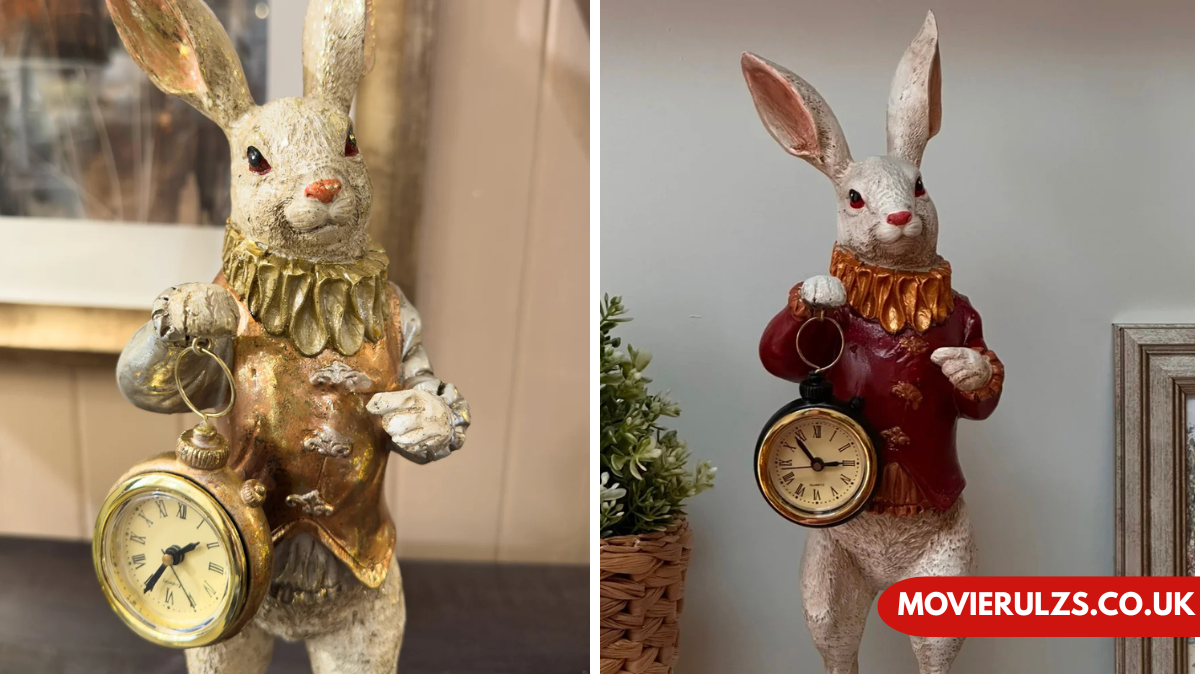
The image of a rabbit with clock instantly conjures a peculiar yet familiar scene: a hurried creature glancing down at a ticking timepiece as though life itself depends on that very second. Strange as it sounds, this motif has crept into popular imagination, literature, art, internet culture, psychology, and even everyday conversations about time and urgency.
At its core, the idea of a rabbit with clock combines two powerful elements: time — a universal fixed reality that governs all lives — and curiosity — the driving force behind human thought and imagination. When these elements blend into one visual, it becomes more than whimsical: it becomes meaningful, resonant, and deeply symbolic.
In this comprehensive article, we’ll explore the origins, meanings, cultural impact, and ongoing relevance of the rabbit with clock. What does it stand for? How did it become a cultural icon? Why do people continue to use it to express complex feelings about time, life, and opportunity? These are the questions we’ll answer with depth, clarity, and real‑world context.
The Literary Origins of the Rabbit With Clock
The most recognizable origin of the rabbit with clock comes from one of the most beloved works of fantasy literature ever written: Alice’s Adventures in Wonderland, by Lewis Carroll.
Enter the White Rabbit
Published in 1865, Alice’s Adventures in Wonderland begins not with Alice waking up, but with her noticing something extraordinary: a white rabbit wearing clothes, speaking to itself, and checking a pocket watch.
This White Rabbit isn’t just in a hurry. He’s obsessed with being late. His repeated cry — “I’m late! I’m late! For a very important date!” — is one of the most memorable opening lines in literary history.
Unlike most animal characters in fiction, this rabbit doesn’t speak for moral lessons, comedic relief, or companionship. Instead, he drives the plot. Alice doesn’t enter Wonderland because she sleeps, dreams, or imagines it — she falls down a rabbit hole because she follows him.
What the Rabbit Represents
From the very beginning, the rabbit with clock is not a random absurdity. He embodies:
- Curiosity — Alice follows him out of intrigue, not fear.
- Urgency — time matters; it is running out.
- Threshold — he stands between the real world and the unknown.
In literary analysis, this moment — seeing the rabbit with a clock — signals a shift from everyday reality into a realm where normal rules no longer apply. Time itself will behave strangely in Wonderland, and this initial encounter sets the tone.
The rabbit doesn’t just carry time. He represents it.
Symbolism Behind the Rabbit With Clock
A rabbit possessing a clock may sound odd at first, but when we unpack its meanings, we find several powerful symbolic layers.
Time and Urgency
At its simplest and most immediate level, the rabbit with clock symbolizes time pressure.
Time is something everyone experiences but few truly control. In real life, we:
- Race against deadlines
- Wake up late for appointments
- Stress about aging
- Feel anxiety about unfinished goals
Seeing a frantic rabbit checking his timepiece reflects these universal pressures. The image visually communicates urgency in a way words often cannot.
In modern usage, the rabbit with clock is a metaphor for situations such as:
- Running out of time before a deadline
- Procrastination that becomes panic
- Last‑minute realizations of responsibility
- The feeling of not having enough hours in a day
Because time governs mortality, careers, relationships, and productivity, urgency resonates on both personal and existential levels.
Curiosity and the Call to Adventure
Beyond urgency, the rabbit with clock also represents curiosity.
Alice does not follow the rabbit because she is scared. She follows him because she wants to know more.
That sense of wonder — the urge to explore something unexpected — is a profound part of human nature. The rabbit with clock becomes a symbolic invitation to step outside comfort zones, to investigate questions that challenge assumptions.
In mythological and psychological terms, the rabbit can be seen as a guide into the unknown — similar to the role of crows, snakes, or wise elders in other narratives.
Time as a Psychological Construct
Some scholars interpret the rabbit with clock as a representation of how humans experience time, rather than the abstract reality of clocks.
When we are anxious, time feels fast. When we are bored, it feels slow. When we are waiting for something important, every second feels stretched.
The rabbit’s anxious movement echoes this psychological tension. Time is simultaneously mechanical (the clock ticking) and emotional (the rabbit’s feelings).
In this sense, the rabbit with clock becomes a symbol of subjective time — time as felt, not merely measured.
Visual Traditions: Illustrations and Artistry
The success of the rabbit with clock motif is not only literary but also visual.
Classic Depictions
When Lewis Carroll published Alice’s Adventures in Wonderland, one of the greatest boosts to its lasting image came from the original illustrations by Sir John Tenniel. Tenniel’s illustrations gave visual form to Carroll’s whimsical world.
In his art, the White Rabbit is:
- Dressed in period clothing (waistcoat, jacket)
- Holding a pocket watch
- Often shown mid‑dash, looking anxious or startled
These visual elements cemented the rabbit with clock in cultural memory long before film, television, or digital media existed.
Modern Artistic Interpretations
Over the years, countless artists have revisited the idea:
- Surreal paintings exaggerating the size of the clock
- Interpretations where the rabbit melts into the machinery of time
- Digital art blending Wonderland symbolism with modern anxieties
Visual artists explore the rabbit with clock not just as a nostalgic callback, but as a commentary on:
- Modern life’s rush
- The speed of technological change
- The way time shapes identity
These artworks often emphasize mood, using light, color, and surreal distortion to deepen meaning.
The Rabbit With Clock in Digital and Meme Culture
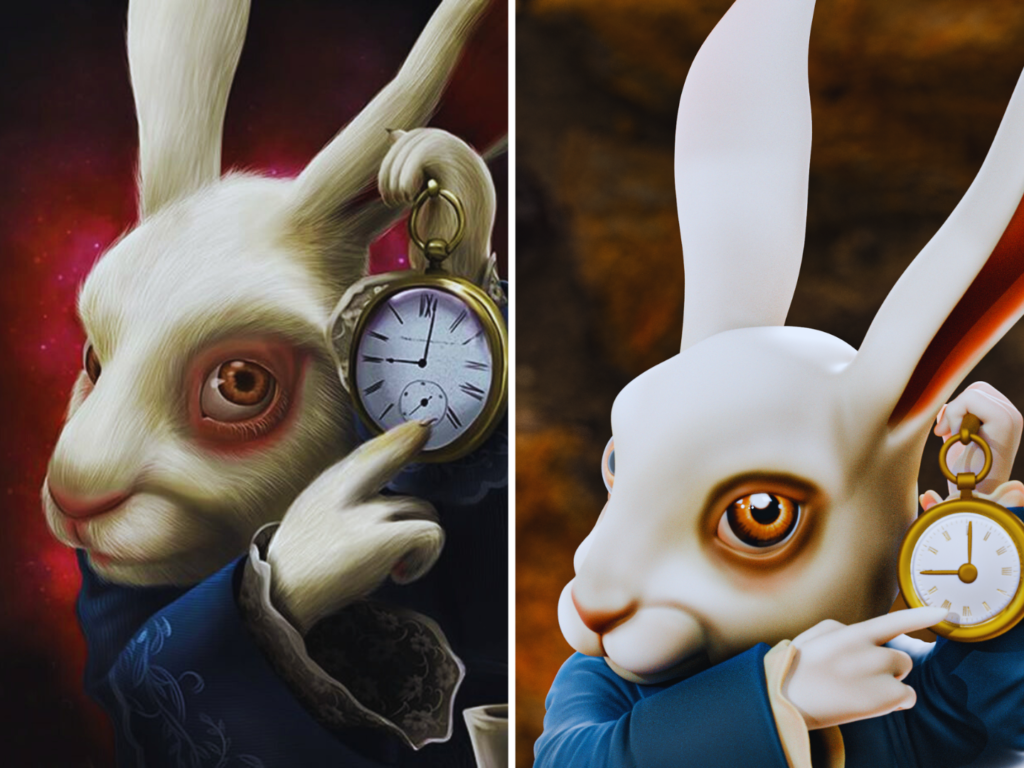
In the 21st century, the rabbit with clock entered a new realm — internet culture.
A Viral Illustration
In the 2010s, illustrator Luz Tapia created a cartoon image of a white rabbit intensely pointing at a clock. This picture spread online, gaining traction on platforms like Twitter, Instagram, Tumblr, and later TikTok and Reddit.
The illustration was not linked to any official Alice in Wonderland adaptation, yet it resonated. Users began sharing it in contexts like:
- Reminders about deadlines
- Last‑minute preparations
- End‑of‑semester stress
- Birthday notifications
Because the image was expressive, shareable, and easily understood without words, it became a digital shorthand for running out of time.
Why the Meme Took Off
Several factors explain the popularity of the rabbit with clock meme:
- Universal relatability – Everyone understands feeling late or rushed.
- Visual clarity – The image communicates urgency instantly.
- Emotionally expressive – The rabbit’s urgency mirrors shared experiences.
- Adaptable – Users overlay text about exams, work, plans, or life goals.
In internet culture, visual memes succeed when they capture complex emotion simply. The rabbit with clock does exactly that.
Psychological Interpretations: Time, Stress, and Human Behavior
The enduring popularity of the rabbit with clock motif also reveals something about the human psyche.
Time Anxiety
Modern life is filled with deadlines — work, school, family, health. In psychology, time anxiety refers to the stress people feel when they feel not enough time remains for their goals.
People with high time anxiety often:
- Procrastinate
- Feel guilt about time spent resting
- Obsess over productivity
- Experience stress when schedules change
The rabbit with clock reflects this state. His anxiety isn’t just comical — it’s recognizable on a visceral level.
The Fear of Missing Out
Related to time anxiety is the fear of missing out — often called FOMO.
Time imposes limits: months pass, opportunities change, moments disappear. The rabbit with clock encapsulates the fear that something important is slipping away, urging immediate action.
This is why the image works so well in social media contexts. It’s not just about being late — it’s about fear that time is moving faster than we are.
The Rabbit With Clock Beyond Pop Culture
The influence of the rabbit with clock extends into many real‑world areas:
Education and Deadlines
Teachers, students, and educational platforms often use the image or idea to communicate deadlines. A cartoon rabbit pointing at a clock is instantly understood by learners of all ages.
In classroom settings, it can become a light‑hearted symbol of:
- Upcoming exams
- Assignment due dates
- Time management lessons
It humanizes a stressor without dismissing its importance.
Corporate and Productivity Messaging
Workplaces sometimes use the motif to motivate teams, particularly when project deadlines approach. In presentations or internal communications, the rabbit with clock may appear as a visual metaphor for prioritization, time tracking, and efficiency.
In productivity literature, the motif aligns with principles like:
- Proactive time blocking
- Prioritizing important tasks
- Reducing procrastination
Although whimsical, the image reinforces real psychological and behavioral principles.
Common Misconceptions and Clarifications
Because the rabbit with clock is widely used, some misconceptions have developed:
Misconception: It Only Comes From Alice in Wonderland
While the original idea is rooted in Alice’s Adventures in Wonderland, the modern meme and cultural usage have expanded far beyond that narrative. The internet meme version often carries meanings unrelated to the original story.
Misconception: It’s Just a Cute Joke
Although the image often appears humorous, its popularity stems from deeper psychological resonance with time, urgency, identity, and human experience.
Time is not just measured by clocks, but felt emotionally. The rabbit captures both dimensions.
Frequently Asked Questions About Rabbit With Clock
What does a rabbit with clock symbolize?
A rabbit with clock usually symbolizes urgency, the pressure of time, and a sense of running out of time. It can also represent curiosity that leads to exploration or unexpected experiences.
Where did the idea of a rabbit with clock come from?
The concept originates from the White Rabbit in Alice’s Adventures in Wonderland, who carries a pocket watch and leads Alice into a world of wonder and chaos.
Why is the rabbit with clock popular online?
In digital culture, the image became popular as a meme because it visually expresses the common feeling of rushing against time. It’s often used to illustrate deadlines and last‑minute anxieties.
Is the rabbit with clock connected to psychology?
Yes. Psychologists discuss time anxiety and the fear of missing out, both of which are reflected in the image’s portrayal of urgency and stress about time.
What lessons can the rabbit with clock teach?
The image encourages mindfulness about time, but also suggests a balanced approach: pay attention to time without letting panic govern actions.
Conclusion
The rabbit with clock is more than a quirky visual. It is a powerful symbol woven through literature, art, psychology, and digital culture. From its origin in Alice’s Adventures in Wonderland to its modern status as a viral meme, it reveals how deeply humans feel about time — not just as a concept, but as a lived experience.
We all chase time. We all notice its passage. Whether we’re running late for a meeting, stressing over a deadline, or simply reflecting on life’s fleeting nature, the image of a rabbit with clock holds a mirror to our most universal anxieties and aspirations.
Because time waits for no one, the rabbit with clock will continue to capture imaginations — not as a trivial cartoon, but as a symbol that speaks directly to the heart of human experience: time matters, curiosity transforms, and every second counts.