Introduction
When a multi-vehicle collision closes section of M1 southbound in Bedfordshire, the impact is felt far beyond the immediate crash site. As one of the UK’s busiest motorway corridors, the M1 plays a vital role in connecting towns, cities, and major business hubs. Any closure—especially one involving multiple vehicles—creates significant disruption for thousands of motorists who rely on the route daily. This incident was no exception, with long delays, local road congestion, and emergency operations unfolding throughout the day.
The closure highlighted just how quickly traffic issues can escalate on a major motorway. Drivers encountered unexpected queues stretching for miles, while diversion routes struggled with the sudden influx of vehicles. The situation emphasised the importance of timely communication from National Highways and the need for motorists to stay informed during such major traffic events. As details emerged, it became clear that the multi-vehicle collision closes section of M1 southbound in Bedfordshire had become one of the most talked-about travel incidents in the region.
What Happened During the Collision
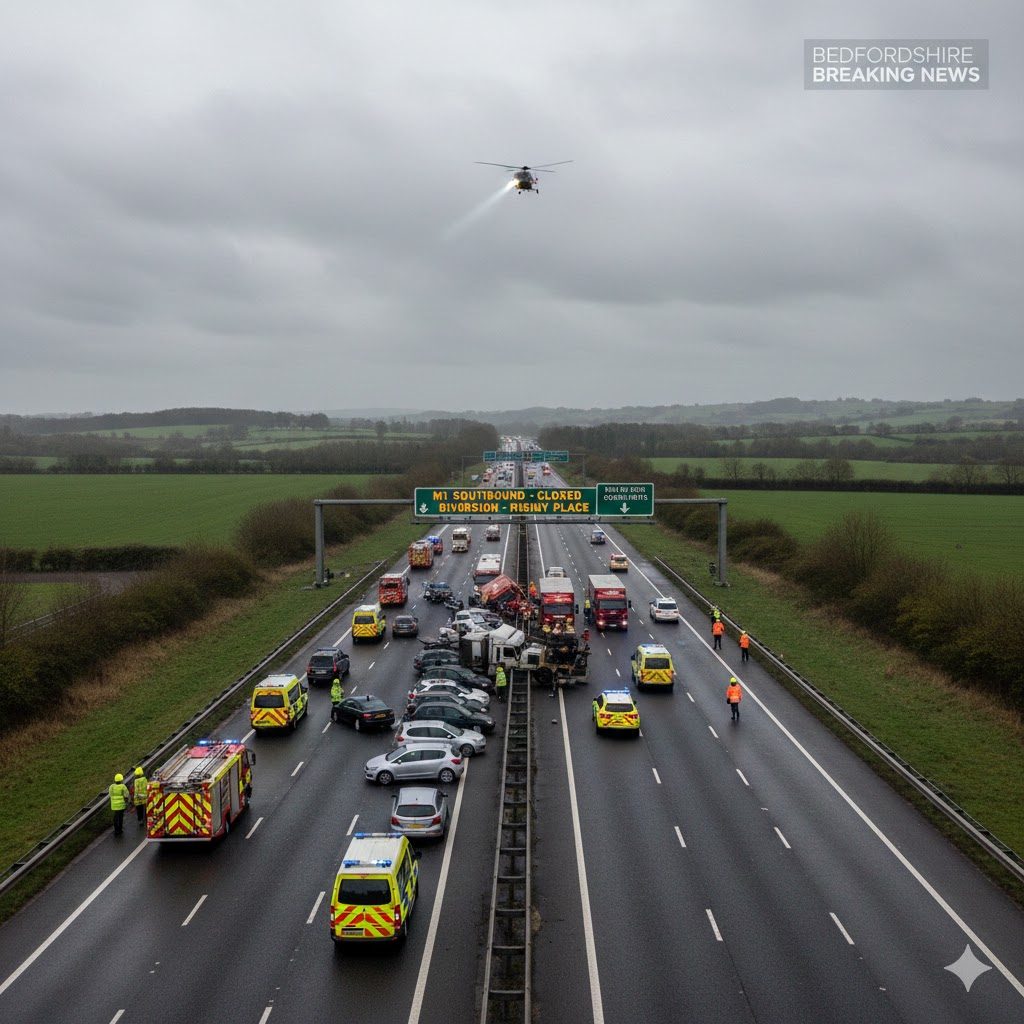
The incident began when several vehicles were involved in a crash that forced authorities to close a significant section of the carriageway. Reports from the scene suggested that a combination of cars, vans, and possibly a larger goods vehicle were affected, creating a complicated and hazardous environment across multiple lanes. As a multi-vehicle collision closes section of M1 southbound in Bedfordshire, traffic rapidly built up behind the scene, leaving motorists stranded and waiting for updates.
The crash occurred between key junctions that play a crucial role in connecting Bedfordshire travellers to London, Milton Keynes, and other major destinations. Witnesses described sudden braking, damaged vehicles scattered across lanes, and extensive debris. The scale of the collision meant that emergency services had to close the entire southbound section to ensure the safety of everyone involved and to allow recovery teams to work efficiently.
Emergency Response and On-Scene Operations
Emergency services responded immediately once it became clear that a multi-vehicle collision closes section of M1 southbound in Bedfordshire. Police units were first to arrive, quickly followed by paramedics and fire crews. Their priority was to assess injuries, secure the scene, and prevent further incidents. With multiple vehicles involved, responders had to navigate a challenging environment, ensuring the safety of victims and motorists still approaching the area.
An air ambulance was called due to the seriousness of the situation, which temporarily halted traffic on the northbound side as well. Firefighters worked to contain fuel spills, disconnect dangerous car batteries, and remove damaged vehicle parts blocking the road. Every step was carried out with precision to ensure that the motorway could eventually be cleared and reopened as safely as possible.
Traffic Disruption and Motorist Impact

Whenever a multi-vehicle collision closes section of M1 southbound in Bedfordshire, the impact on traffic is immediate and severe. Motorists stuck behind the incident experienced hours of delays, with queues stretching back for miles. Those travelling to work, airports, deliveries, or family commitments were forced to wait as emergency teams carried out essential operations at the crash site.
Local roads throughout Bedfordshire also became heavily congested as drivers attempted to escape the delays by seeking alternative routes. Towns such as Toddington, Flitwick, Bedford, and Woburn saw unusually high traffic volumes. Public transport routes were also affected, with some bus services reporting delays of more than an hour. The ripple effect of the closure demonstrated how important the M1 is to regional mobility.
Alternative Routes and Travel Advice
National Highways quickly advised drivers to avoid the affected section of the motorway entirely. With a multi-vehicle collision closes section of M1 southbound in Bedfordshire, diversions were set up to redirect traffic through A-road networks and nearby towns. However, these routes soon became overwhelmed due to the volume of cars leaving the motorway.
Drivers were encouraged to check live traffic updates through radio bulletins, navigation apps, and motorway signage. Many motorists relied heavily on digital tools to find the fastest alternative routes, though no option was entirely free from congestion. The closure served as a reminder of how vital real-time information is when travelling on the UK’s major road network.
Investigation Into the Incident
After any major motorway crash, especially when a multi-vehicle collision closes section of M1 southbound in Bedfordshire, police launch an in-depth investigation to determine what happened. Specialists examine vehicle positions, skid marks, weather conditions, and any CCTV or dashcam footage available. Understanding the cause is essential not only for legal reasons but also to improve road safety and prevent similar incidents.
Investigators may take several days to compile a full report. Factors such as vehicle speed, driver behaviour, road conditions, and potential mechanical faults all come under scrutiny. These investigations help identify whether changes need to be made to signage, speed limits, lighting, or road layout in the affected area.
Reopening the Motorway and Returning to Normal
Reopening the M1 required careful coordination between emergency services, recovery teams, and National Highways. Even after the multi-vehicle collision closes section of M1 southbound in Bedfordshire, the motorway cannot simply be reopened without thorough checks. Crews had to remove debris, recover damaged vehicles, and treat any fuel or oil spills before lanes could safely reopen.
Once lanes were gradually made available again, traffic began moving but remained slow as motorists cleared the backlog. Some residual delays continued for hours after the reopening, demonstrating how long it takes for a motorway to recover from a full closure. Eventually, the route returned to normal, allowing drivers to resume their journeys.
Conclusion
The incident proved how disruptive it can be when a multi-vehicle collision closes section of M1 southbound in Bedfordshire, impacting thousands of travellers, local communities, and emergency services. It highlighted the importance of careful driving, motorway awareness, and the vital role played by first responders in restoring order after such major collisions.
As investigations continue and drivers reflect on the day’s chaos, the event stands as a reminder of the unpredictable nature of motorway travel. Staying alert, following safety guidance, and keeping updated on traffic conditions can help reduce risks and improve safety for everyone using the M1.
Frequently Asked Questions
What caused the collision on the M1?
The cause is still under investigation, with authorities reviewing various factors including weather, driver behaviour, and road conditions.
How long was the motorway closed?
The closure lasted several hours while emergency and recovery teams worked to clear the scene safely.
Were there any injuries reported?
Emergency services attended to several individuals, though full details were not confirmed immediately.
Which junctions were affected?
The closure impacted a major southbound stretch between key Bedfordshire junctions, disrupting regional travel.
Was the northbound side also affected?
The northbound carriageway experienced a temporary closure to allow an air ambulance to land safely.
You May Also Read
Share via: