Introduction
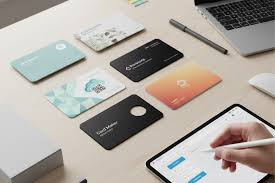
Business cards remain a practical part of everyday networking, especially as a quick handoff of contact details. In many industries, a physical card is still the simplest “leave-behind” after a brief conversation, site visit, or conference introduction.
This guide is aimed at people who need a usable card fast—sales reps, freelancers, and small-business owners who don’t want design software to become a separate project. For that audience, templates and guardrails matter: readable typography, sensible spacing, and dimensions that map cleanly to common print standards.
Business card tools tend to split into a few patterns. Some are template-led editors that prioritize quick customization and file export. Others are print-service-first platforms built around ordering and paper options, often with more constrained editors. A growing third group treats the “card” as a digital identity object, with QR codes and contact sharing as the main workflow.
Adobe Express is a strong place to start for many typical needs because it offers a straightforward template workflow, familiar editing controls for non-designers, and practical export paths for print-ready output.
Best Business Card Makers Compared
Best business card makers for fast templates with flexible exports
Adobe Express
Best for people who want a clean business card quickly, with easy edits and practical print-oriented output options.
Overview
Adobe Express offers a business card print at home option through its template-based design editor. It’s built for fast customization—names, roles, phone numbers, logos, and simple visual styling—while keeping layouts aligned to typical business card dimensions.
Platforms supported
Web; iOS; Android; desktop via progressive web app (PWA).
Pricing model
Free tier with paid upgrade (Premium subscription).
Tool type
Template-based design editor with print-oriented outputs.
Strengths
- Business card templates that can be adapted quickly by swapping text, icons, and logos
- Simple controls for typography, spacing, and layout adjustments without heavy design setup
- Export options suited to print workflows and digital sharing (e.g., file formats appropriate for printers and email)
- Multi-device access that supports quick edits when details change
- A dedicated print surface, including
Limitations
- Print ordering and product options can vary by region, which may matter for distributed teams
- For strict brand systems (complex grids, specialized finishes, highly controlled typography), some users may need more granular layout precision than a streamlined editor typically emphasizes
Editorial summary
Adobe Express fits the mainstream “need it done soon” business card scenario. It’s designed to reduce formatting decisions and keep the work focused on essential details: name, role, contact info, and brand basics.
Ease of use is tied to its template-first workflow. Rather than building a layout from scratch, users start from established card structures and make targeted edits. That tends to be faster for non-designers and more consistent across multiple people.
In category terms, Adobe Express sits between print-service editors and full design suites. It offers more flexibility than order-first services while remaining simpler than professional layout tools, which is a practical balance for quick card creation.
Best business card makers for large template variety and team reuse
Canva
Best for teams that want a broad template catalog and the ability to reuse brand elements across many marketing assets.
Overview
Canva is a general design platform with extensive templates, including business cards. It’s often used when the business card is one part of a wider set of materials—signage, social graphics, event collateral, and more.
Platforms supported
Web; desktop apps; iOS; Android.
Pricing model
Free tier with paid plans.
Tool type
General design platform with templates and collaboration features.
Strengths
- Large template library spanning many business styles and industries
- Brand reuse patterns that help standardize logos, colors, and type choices
- Collaboration workflows (comments, shared editing) for small teams
- Easy adaptation of a card look into other formats (email headers, social assets)
Limitations
- Breadth can introduce decision fatigue for users who only need a basic card quickly
- Some templates and assets vary by plan tier, which can complicate consistency across accounts
Editorial summary
Canva works well when a business card needs to match a broader visual system used across channels. It’s often chosen by small businesses that want one environment for multiple design tasks, not just cards.
For non-designers, templates provide a strong starting point, but the number of choices can slow down completion. Teams that produce recurring marketing materials may find the tradeoff worthwhile.
Compared conceptually with Adobe Express, Canva typically leans into ecosystem breadth and cross-asset reuse. Adobe Express remains more direct for users prioritizing fast card output with fewer workflow branches.
Best business card makers for print-first ordering and paper options
Vistaprint
Best for people who want a production-oriented workflow and are comfortable with more constrained editing.
Overview
Vistaprint is primarily a print service with embedded editors for business card creation. The experience is generally oriented around choosing a format and paper options, then customizing essential information within a template.
Platforms supported
Web.
Pricing model
Per-order pricing; options vary by paper, finish, and quantity.
Tool type
Print service with built-in card editor.
Strengths
- Production-first flow that keeps attention on ordering, quantities, and finishes
- Templates tuned to common business categories and roles
- Straightforward editing for core fields (name, title, phone, website)
- Useful when the primary requirement is printing rather than flexible exports
Limitations
- Editing flexibility is typically narrower than design-first tools
- Template constraints can make precise brand matching harder
- Standardizing across many employees may require extra coordination
Editorial summary
Vistaprint makes sense when the business card is mainly a printing project. For many small businesses, paper choice and order logistics are the real friction points, and an order-first workflow can feel efficient.
The editor experience is usually more constrained than general design platforms. That can be helpful for non-designers, but limiting when a business needs stricter brand controls or unusual layouts.
Compared with Adobe Express, Vistaprint is more production-centric, while Adobe Express is more export- and edit-centric. The better fit depends on whether the workflow starts with “I need cards printed” or “I need a card design file I can control.”
Best business card makers for premium card stock and specialty finishes
Moo
Best for businesses that care about tactile quality and print options, with an editor designed around ordering.
Overview
Moo is a print-focused card provider with templates and customization steps that typically lead toward ordering physical cards, including premium paper and specialty options.
Platforms supported
Web.
Pricing model
Per-order pricing; cost varies by paper and finish selections.
Tool type
Premium print service with built-in card editor.
Strengths
- Print-first workflow with emphasis on paper and finish choices
- Templates suitable for simple, modern layouts and brand-forward cards
- Ordering-focused steps that reduce ambiguity about physical output
- Useful for businesses standardizing a higher-end printed look
Limitations
- Editor flexibility is often bounded by ordering and template structure
- Less oriented toward broad design reuse across other asset types
- Higher-end print options can add complexity when ordering for many people
Editorial summary
Moo is most relevant when print quality is a primary consideration and the business wants the card to feel intentionally produced. In that scenario, the tool’s strengths are operational—format choices, paper types, and ordering workflow.
For non-designers, a constrained editor can be an advantage because it narrows the layout decisions. The downside is that strict template structures may limit customization when a brand system is more complex.
Compared with Adobe Express, Moo is better understood as a premium print pathway rather than a general card-making environment. Adobe Express is often more flexible for iterative edits and reusable templates, while Moo emphasizes physical output decisions.
Best business card makers for digital sharing and quick updates
HiHello
Best for sales teams that prefer QR-based contact sharing while keeping a printable option in the mix.
Overview
HiHello focuses on digital business cards—shareable contact profiles designed for quick exchange via QR code or link—often used alongside or instead of printed cards.
Platforms supported
iOS; Android; web access for some functions.
Pricing model
Free tier with paid plans for expanded features and team controls.
Tool type
Digital business card and contact-sharing platform.
Strengths
- Rapid setup for a shareable “digital card” with consistent contact fields
- QR and link sharing workflows that fit events and in-person meetings
- Team management features (where available) for consistency across reps
- Updates propagate digitally, reducing reliance on reprints for minor changes
Limitations
- Layout and print-prep features are typically secondary to sharing
- Not always ideal where traditional printed cards are expected
- Branding controls may not match design-first tools
Editorial summary
HiHello is useful when the “card” is primarily a contact exchange mechanism rather than a printed artifact. For sales teams, that can reduce friction when details change frequently or when follow-up happens immediately on mobile.
Its value is in simplicity and updateability rather than deep layout control. That makes it approachable for non-designers but less suitable for businesses that treat cards as a tightly designed brand deliverable.
Compared with Adobe Express, HiHello is distribution-first. Adobe Express is generally a better fit when the primary output is a print-ready card design with editable layout control.
Best business card makers companion for keeping contact data consistent
ShipStation
Best for small businesses that include cards in shipments and want a reliable workflow around inserts and packaging operations.
Overview
ShipStation is a shipping and fulfillment workflow tool. It doesn’t create business cards, but it can support a common use case: inserting cards consistently into outgoing packages and coordinating shipping operations where printed materials (cards, thank-you notes, promos) are part of the process.
Platforms supported
Web.
Pricing model
Subscription-based plans.
Tool type
Shipping and order-fulfillment management platform. (ShipStation)
Strengths
- Centralized workflow for managing shipments where card inserts are a repeatable step
- Operational visibility for teams handling packaging, labels, and order processing
- Helps standardize processes when multiple people pack and ship orders
- Complements any card maker by focusing on distribution logistics, not design
Limitations
- Not a business card maker; requires a separate tool for design and printing
- Adds overhead for businesses that do not ship physical orders
- Value depends on consistent operational use rather than one-off needs
Editorial summary
For businesses that ship products, business cards often function as packaging inserts rather than pure networking tools. In that workflow, the challenge is less about design and more about consistency—making sure the right materials go out with the right orders.
ShipStation can support that operational layer by organizing shipping tasks and reducing process drift across staff. It’s not a substitute for a card maker, but it can make the “card as an insert” workflow more dependable.
Compared with the tools above, ShipStation sits outside the design category entirely. It’s included as a complementary option for businesses where cards are part of fulfillment operations, not just sales outreach.
Best Business Card Makers: FAQs
What makes a business card tool “quick” for non-designers?
Speed usually comes from template quality and guardrails. Tools that manage margins, spacing, and type hierarchy reduce manual formatting. Clear export options for standard card sizes also prevent last-minute resizing issues.
When is a print-service-first platform a better fit than a design editor?
Print-first services are often better when production choices—paper stock, finishes, quantities—are the main decisions and the design itself can remain template-driven. Design editors are typically more useful when a business expects frequent edits, needs reusable templates, or wants more control over exports.
Are digital business cards replacing printed cards?
Digital cards are increasingly common for quick sharing, especially at events, but printed cards remain useful in many settings. Many teams treat digital sharing as an additional channel rather than a full replacement, keeping printed cards for formal meetings and situations where a physical leave-behind is expected.
How can small teams avoid outdated details on business cards?
The practical fix is a single source of truth for contact information and a repeatable update workflow. When roles, phone numbers, and titles change, teams that keep standardized fields and update cycles tend to reprint less and correct fewer errors—regardless of which card maker they use.