
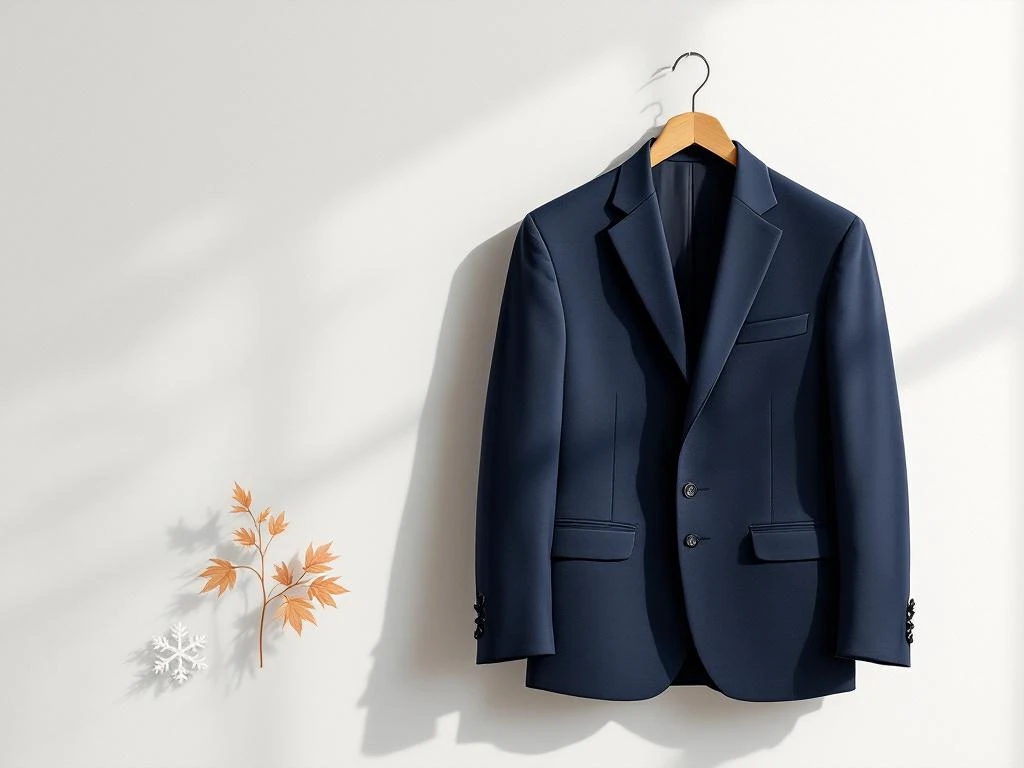
Some suit colours belong quite clearly to one part of the year. Pale beige can look out of place on a wet January afternoon, while very dark brown may feel heavy at a bright midsummer ceremony. Navy is less restricted. It can be styled with lighter cloth and warm-weather accessories or given more texture for weddings held as the temperature falls.
This flexibility helps couples planning well ahead, when the actual weather is impossible to predict. It also suits wedding parties whose members want to wear the suit again. The seasonal character can come from the shirt, tie, waistcoat and shoes, leaving the main suit useful for other events.
Match The Navy to the Expected Light
Colour changes under different conditions. A very dark navy can appear almost black inside a winter venue, while a brighter blue may become much more vivid in direct summer sunlight. Wedding photographs will include indoor rooms, outdoor groups and evening lighting, so it is worth viewing the cloth away from a single shop spotlight.
A Navy Blue Wedding Suit may be plain, checked, herringbone, tweed or pinstriped. TruClothing carries both two-piece and three-piece versions, along with different shades and textures. Product images help narrow the choice, but the venue and time of ceremony should decide whether the final effect needs to be light, formal or textured.
For a midday wedding with outdoor photographs, mid-navy usually retains more visible colour. Deep navy suits evening receptions and formal interiors. A subtle weave can prevent either shade from looking flat without introducing an obvious pattern.
Early-year weddings need depth without gloom
January and February weddings often take place largely indoors, with shorter periods of natural light. A navy suit provides a strong base but does not have to be combined only with black or grey. Burgundy, forest green, muted gold and warm cream can lift the outfit while still suiting the season.
A textured waistcoat is useful when the jacket is removed during the reception. Dark brown or black shoes can both work, depending on the formality of the venue. Brown tends to soften the blue, while polished black creates a sharper evening appearance.
Outerwear should be planned as part of the outfit. A proper wool coat looks more coherent over tailoring than a casual padded jacket, particularly during arrivals and photographs. It must be roomy enough across the shoulders to sit over the suit without crushing the jacket sleeves.
Spring weddings can carry softer colour
As the days become brighter, navy works well with pale blue, soft pink, lilac, sage and cream. These colours can appear in a tie, pocket square or buttonhole rather than being repeated across every item. A white shirt keeps the result crisp and gives pastel accessories a clean background.
Tan or medium-brown shoes suit many daytime spring weddings. Their warmth separates the outfit from conservative office combinations. Brogues add useful texture for a country venue, while a cleaner Oxford or Derby shape fits a hotel or town ceremony.
Rain remains possible, so trouser length and footwear should be practical. A long hem can collect water and mud, particularly when the day includes lawns or gravel paths. Arrange alterations with the chosen shoes and consider how much of the celebration will be outdoors.
Summer styling depends on cloth and construction
Navy remains wearable in summer, but colour alone does not make a suit cool. Fabric weight, lining and construction affect comfort. Read the composition and product details for the specific design, and do not assume that every pale-looking cloth is lightweight or that every dark suit is heavy.
For a warm-weather ceremony, a two-piece navy suit can be more comfortable than a full three-piece. If a waistcoat is important to the groom’s look, it provides the advantage of keeping the outfit formal when the jacket comes off. The shirt needs to fit well because it will be visible for more of the day.
Lighter accessories suit the conditions. A knitted or softly textured tie can feel less severe than shiny dark silk. Tan shoes, a cream waistcoat or a small floral pocket square can move navy towards a summer palette without turning the outfit into beachwear.
Colder-month weddings bring texture back into focus
September and October weddings often combine reasonable daylight with cooler evenings. This is a good setting for navy herringbone, a quiet check or a slightly heavier-looking surface. Rust, mustard, burgundy and darker green accessories all sit well against blue, especially when those shades also appear in flowers or venue styling.
Later in the year, a three-piece suit becomes increasingly useful. The waistcoat adds visual depth and keeps the groom or guest looking dressed after the jacket is removed. Dark brown shoes and a matching belt support the warmer accessories, while black footwear keeps the outfit more formal.
Texture should be distributed carefully. If the suit has a visible check, the tie can be plain. If the suit is plain, a knitted tie or patterned waistcoat may provide enough interest. Several unrelated patterns can make group photographs look busy.
One suit can follow several dress codes
The same navy suit can be adjusted for the role of groom, groomsman or guest. A groom may add a waistcoat and distinctive tie. Groomsmen can wear matching accessories with a simpler two-piece combination. A guest can use the jacket and trousers with a restrained shirt and avoid details that resemble the wedding party.
Afterwards, the jacket and trousers can return with a business shirt, while the waistcoat may work with contrasting tailored trousers at a less formal event. This is where navy earns its place. Its character is not fixed by the month in which it was bought.
Seasonal dressing is mainly a question of cloth, light and supporting colour. Navy accepts those changes more easily than many suit shades. Chosen with the venue and conditions in mind, it can feel appropriate in February, July or October without losing its usefulness once the wedding is over.
